
Fast return to service
Polyaspartic Floors in Los Angeles, CA
A sun-tolerant coating that cures in a day or two, so your garage or shop is not out of use for a week.
- Free on-site estimates
- Slab moisture reading taken before we coat anything
- Written quote that lists the prep and every coat
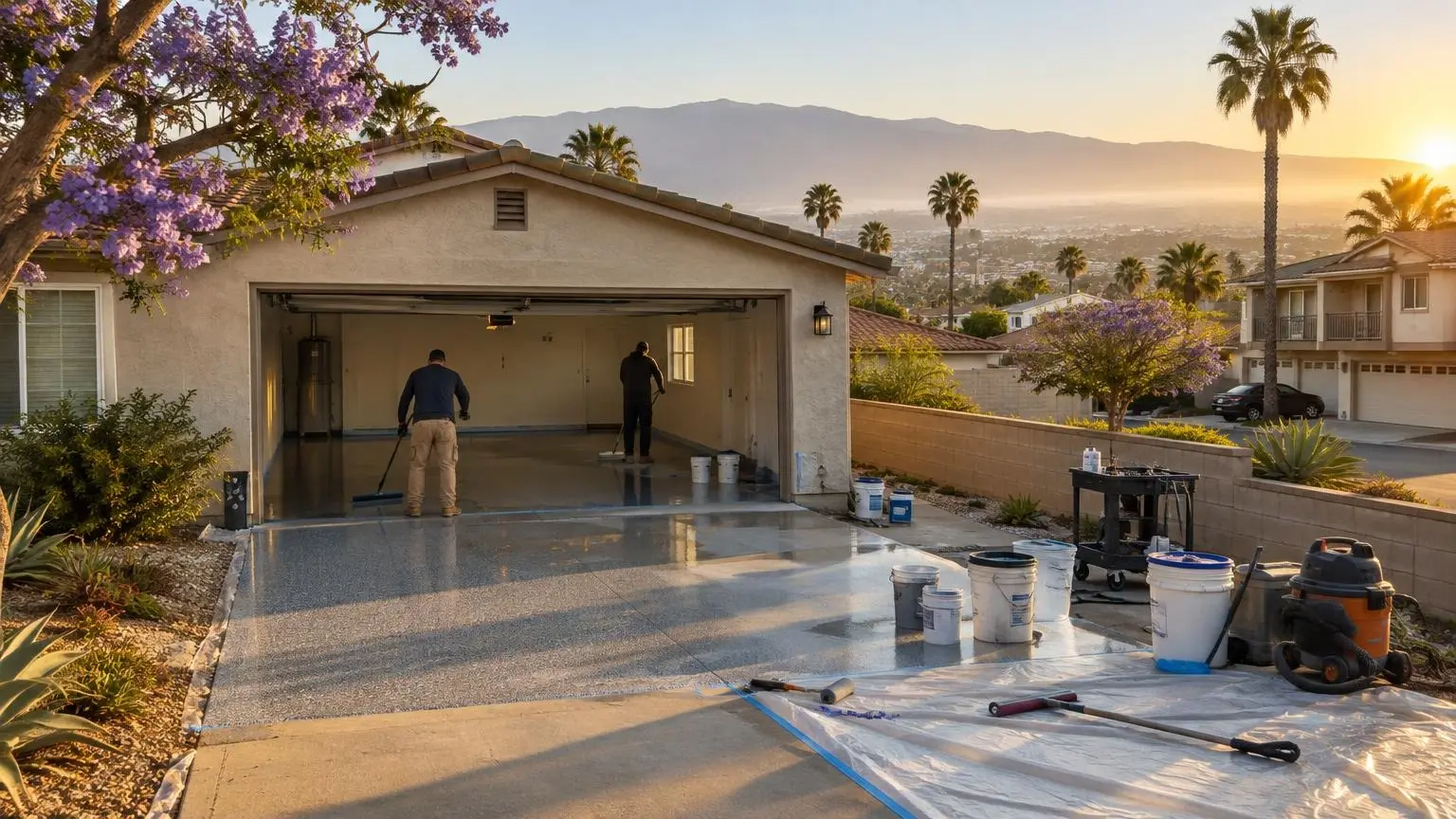
Polyaspartic Floor Coating for Los Angeles Sun and Schedules
Polyaspartic floors are what we recommend for Los Angeles garages and outdoor concrete when sun exposure and downtime are both concerns. Polyaspartic floor coating is a polyurea product; it cures far faster than epoxy and keeps its color in sunlight. HomeGuide scores its UV resistance excellent, where standard epoxy scores poor to fair, and says it fully cures in one to two days, with heavy vehicle traffic after about 24 to 48 hours. Epoxy can need up to a full week. For a household with a single garage, or a business that cannot shut down for long, that gap often settles the choice.
How polyaspartic differs from epoxy
The two materials are often used together, but they behave differently. Epoxy goes on thick, about 10 to 20 mils per coat according to HomeGuide, and is excellent at bonding and building up a floor. Polyaspartic is applied thinner, around 2 to 6 mils per coat, and is harder on the surface, clearer and far more stable in sunlight. A full polyaspartic system uses polyaspartic for every coat. A hybrid uses an epoxy base for bond and build with a polyaspartic topcoat for sun and wear. Which one we suggest depends on the slab and on how you use the space.
Why sunlight decides so many Los Angeles floors
Wikipedia puts downtown Los Angeles at about 3,254 hours of sunshine a year, and summers are usually rainless. An open garage facing the afternoon sun, a covered patio that gets low winter light, or a pool deck in full sun all expose the coating to UV every day. Epoxy exposed like that tends to yellow and turn chalky. Polyaspartic does not, which is why we use it as the top layer on nearly every floor the sun touches.
Fast cure is a skill, not just a feature
The speed that makes polyaspartic useful also makes it less forgiving to install. Its working time is short, and it gets shorter as the slab heats up. In the San Fernando Valley, where Wikipedia notes heat waves are common in September and October and the city's record of 121 degrees was set in Woodland Hills, we start early in the day and mix in smaller batches. Near the coast the opposite problem shows up: damp air and foggy mornings in late spring and early summer. Airborne moisture affects how polyaspartic reacts, so we check humidity and dew point at the slab before each coat. Bob Vila's cost guide also says polyaspartic is not a DIY product, and the timing is a big part of why.
Prep is the same as any serious coating
A fast-curing coating does not excuse a fast prep. We still grind the slab down to clean, open concrete, fill cracks and chipped joints, and test the slab for moisture. Polyaspartic is thin, so it does not bridge or hide surface flaws the way a thick epoxy base does. Where a slab is rough, pitted or cracked, we often use an epoxy or polyaspartic base with flake to add build, then finish with clear polyaspartic.
When polyaspartic makes sense
- Garages with the door open in afternoon sun
- Homes with one garage and nowhere else to park
- Patios, covered outdoor rooms and pool-side concrete
- Shops, studios and small businesses that need the floor back quickly
- Any floor where a light color or clear coat must stay clear for years
When we might suggest something else
For a deep, flowing metallic finish, epoxy is the material that creates the effect, and we put polyaspartic over it only where sun reaches. For heavy industrial floors with forklifts and chemical exposure, a thicker 100 percent solids system may be the better base. And for a slab with high moisture, the primer choice comes first. We will explain the tradeoffs during the estimate.
Planning the install day
Because polyaspartic cures quickly, most residential jobs move from grinding to final coat in a short window, and a lot of garages can be used again a day or two later. You will still need to clear the floor completely before we arrive, including shelves along the walls if you want the coating to run to the edges. Plan to keep pets, kids and cars out until we say the floor is ready. The smell during application is strong but fades quickly as the coating cures, so keep the door to the house closed while we work.
Living with a polyaspartic floor
HomeGuide puts the life of a polyaspartic floor at 10 to 20 or more years. Sweep grit often, use a cleaner that is pH-neutral, and wipe up harsh chemicals quickly. Use pads under kickstands and jack stands. If the surface ever dulls in the tire paths after heavy use, a clean, scuff and recoat can refresh it without starting over.
Polyaspartic Systems We Install
Polyaspartic can be the whole floor or just the layer that faces the sun.
Full polyaspartic system
Polyaspartic for base and top coats for the fastest return to service.
Epoxy base, polyaspartic top
Epoxy for bond and build, finished with a clear UV-stable polyaspartic coat.
Polyaspartic flake floor
Vinyl chip broadcast into a polyaspartic base and sealed under clear polyaspartic.
Clear sealer over concrete
A clear polyaspartic over ground or stained concrete where you want the slab to show.
Recoat of an existing floor
A scuffed and cleaned sound coating refreshed with a new polyaspartic topcoat.
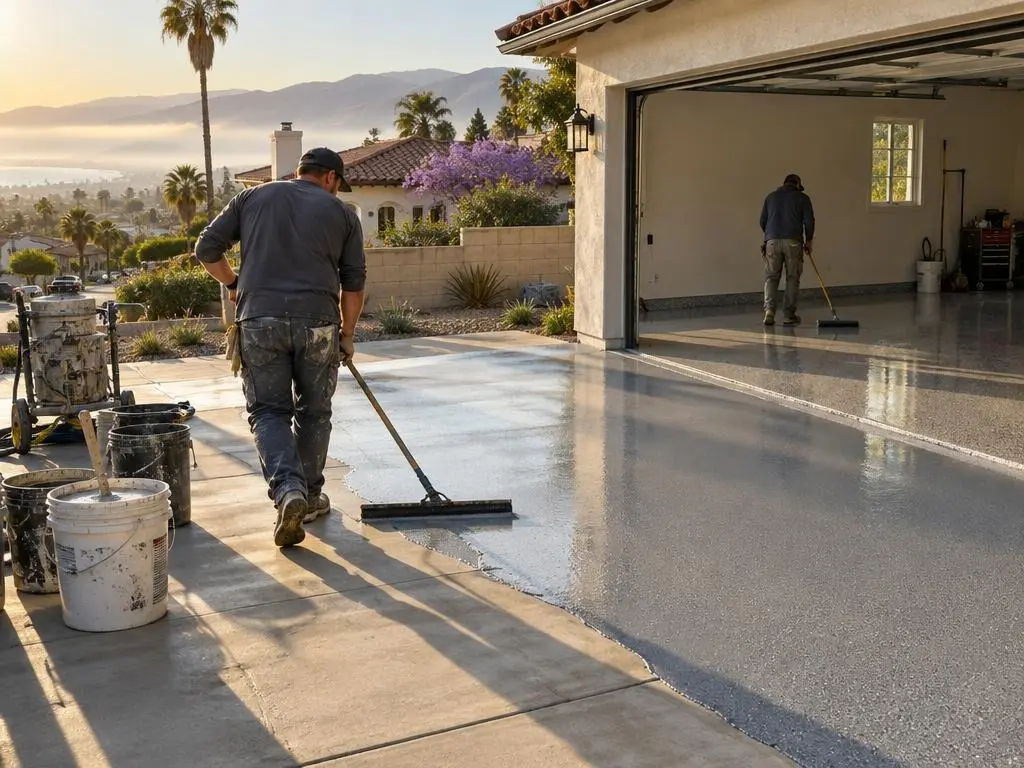
Typical Polyaspartic Floor Coating Costs
| Job | Published range | Source |
|---|---|---|
| Polyaspartic, per sq ft | $5 to $12 | HomeGuide |
| One-car garage | $1,400 to $4,700 | HomeGuide |
| Two-car garage | $2,000 to $6,900 | HomeGuide |
| Three-car garage | $2,900 to $10,400 | HomeGuide |
| Polyaspartic, per sq ft | $4 to $9 | Bob Vila |
| Typical project | $1,440 to $3,240 | Bob Vila |
Two national cost guides, HomeGuide and Bob Vila, shown side by side because their ranges differ. Neither is a Los Angeles quote. The system, the number of coats, flake and repair work set the real number, and the price is whatever your written estimate says.
Our Polyaspartic Install
1. Assess the slab and the sun
We test moisture, check cracks and note where sunlight hits the floor.
2. Pick full or hybrid
We recommend a full polyaspartic or an epoxy-base hybrid and put it in the written quote.
3. Grind and repair
Diamond grinding, vacuuming, and crack and joint filling.
4. Coat in short windows
Small batches applied after checking slab temperature, humidity and dew point.
5. Quick return
Walk-on and park-on times given for your floor, often within a day or two.
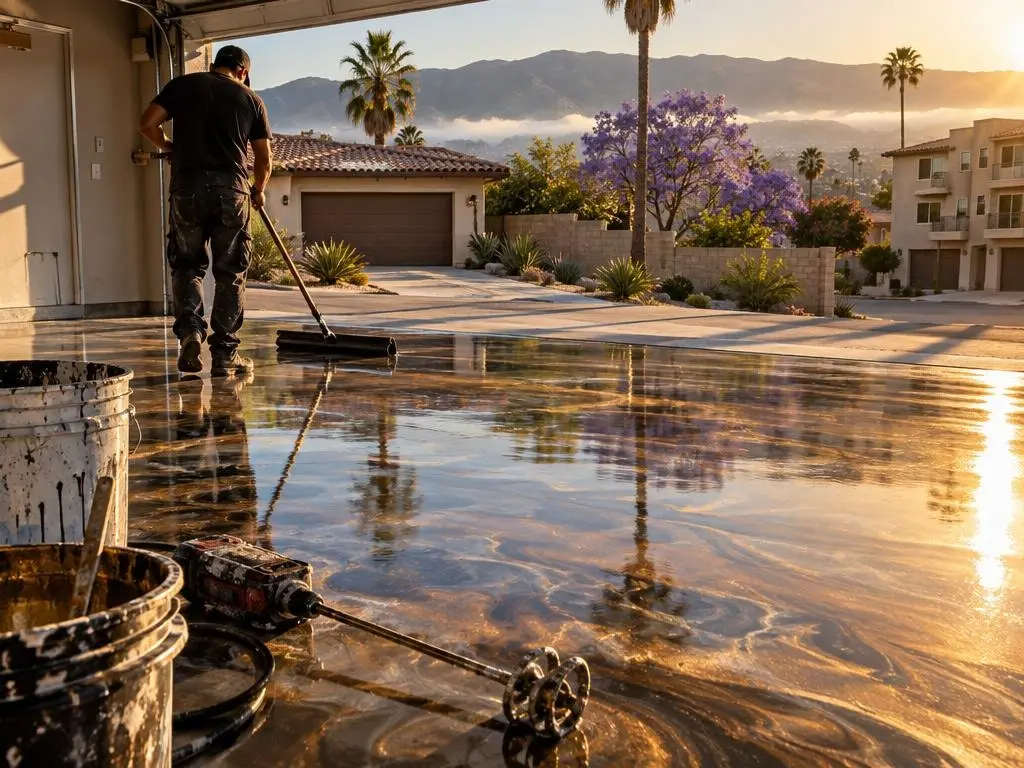
Why Choose Us for Polyaspartic Floors
We schedule around heat and fog
Early starts in hot weather and dew point checks on damp coastal mornings.
Straight answers on hybrids
We explain when an epoxy base helps and when full polyaspartic is worth it.
Same careful prep
Fast cure never means skipping grinding, repair or moisture testing.
Polyaspartic Floors Questions
Is polyaspartic better than epoxy?
For sun exposure and fast cure, yes. On HomeGuide's UV resistance scale, polyaspartic rates excellent while epoxy rates poor to fair, and a polyaspartic floor is fully cured within one to two days. Each epoxy coat goes on thicker, so it still makes a strong base layer, which is why many floors combine both.
How fast can I use a polyaspartic floor?
According to Bob Vila's guide, light foot traffic is fine after about 3 to 4 hours, with vehicles allowed after about 24 hours. HomeGuide puts heavy vehicle traffic at 24 to 48 hours. We give you timing for your particular floor.
Can polyaspartic go outdoors?
Yes. Because it holds up to UV, it is a good choice for patios, covered outdoor rooms and pool-side concrete, usually with texture added for grip.
Why is polyaspartic not a DIY product?
It sets fast, and the working time shortens in heat and changes with humidity. Bob Vila's guide notes it is not meant for DIY, and errors are difficult to correct after it cures.
What lifespan does a polyaspartic floor have?
HomeGuide puts it at 10 to 20 or more years, depending on prep, use and care.
Polyaspartic Floors Service Areas
- Epoxy Flooring in Los Angeles, CA
- Epoxy Flooring in Pasadena, CA
- Epoxy Flooring in Glendale, CA
- Epoxy Flooring in Burbank, CA
- Epoxy Flooring in Santa Monica, CA
- Epoxy Flooring in Culver City, CA
- Epoxy Flooring in Beverly Hills, CA
- Epoxy Flooring in Torrance, CA
- Epoxy Flooring in Long Beach, CA
- Epoxy Flooring in Inglewood, CA
- Epoxy Flooring in Downey, CA
- Epoxy Flooring in Whittier, CA
- Epoxy Flooring in Alhambra, CA
- Epoxy Flooring in Arcadia, CA
- Epoxy Flooring in Monrovia, CA
- Epoxy Flooring in West Covina, CA
- Epoxy Flooring in Santa Clarita, CA
- Epoxy Flooring in Calabasas, CA
- Epoxy Flooring in Redondo Beach, CA
- Epoxy Flooring in Manhattan Beach, CA
- Epoxy Flooring in Hawthorne, CA
- Epoxy Flooring in Carson, CA
- Epoxy Flooring in Gardena, CA
- Epoxy Flooring in Lakewood, CA
- Epoxy Flooring in South Gate, CA
Get a Polyaspartic Floors Estimate
Ask about a polyaspartic system and get a free, written estimate.