
Full-broadcast and partial chip floors
Flake Floor Coatings in Los Angeles, CA
A speckled, textured floor that forgives dust and wear and looks the same years later.
- Free on-site estimates
- Slab moisture reading taken before we coat anything
- Written quote that lists the prep and every coat
Flake Epoxy Floors for Busy Los Angeles Garages
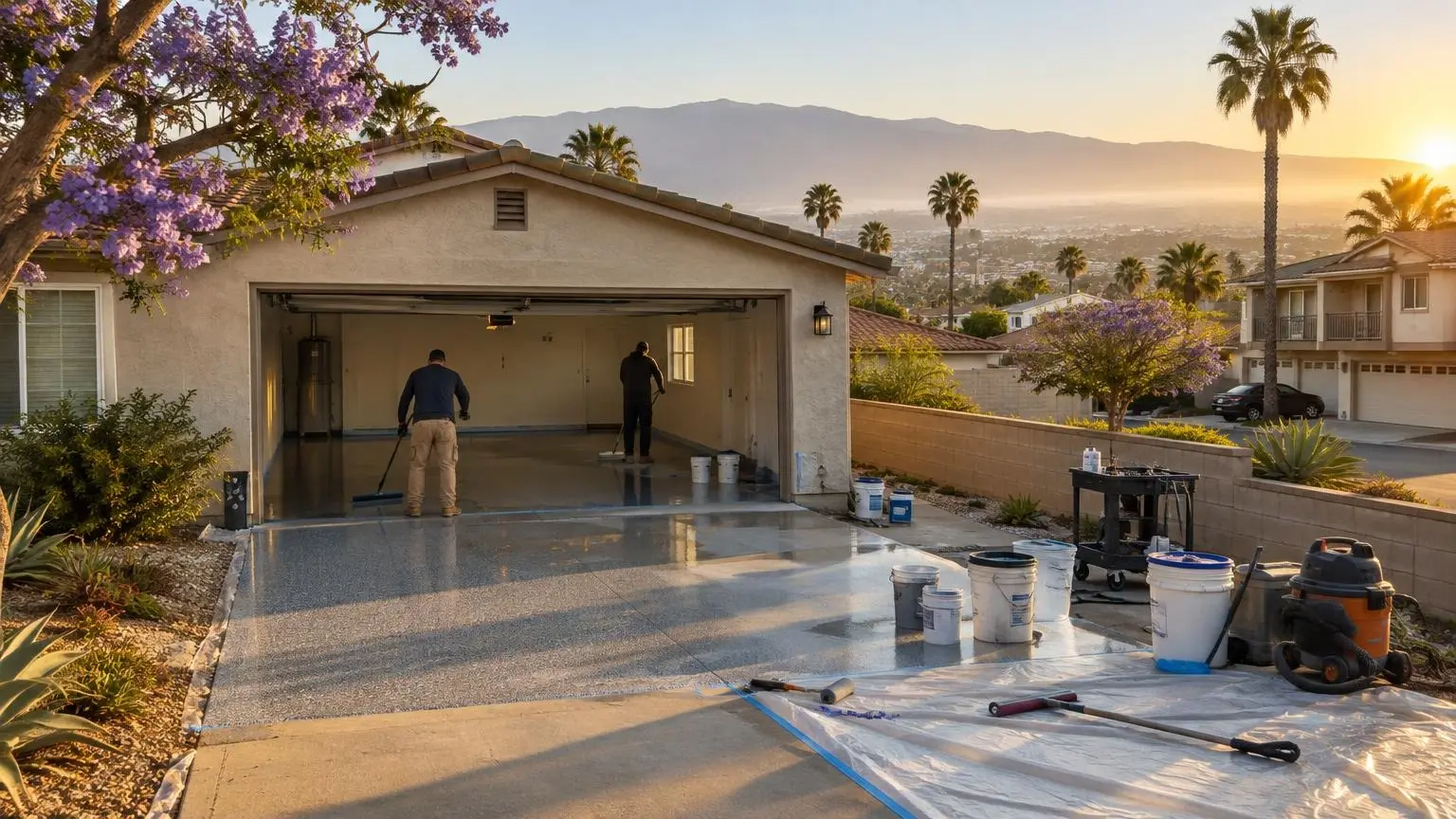
Flake floor coatings are what most Los Angeles homeowners end up choosing for the garage. A flake epoxy floor starts with a resin base coat; colored vinyl chips are thrown into the wet resin, and the whole layer is locked under clear topcoat. Because the chips break up the surface, dust, footprints and tire marks are far less visible than on a solid color, and the texture adds traction for shoes and tires. It is a good match for a garage that also serves as a gym, workshop or storage room.
Building a chip floor, layer by layer
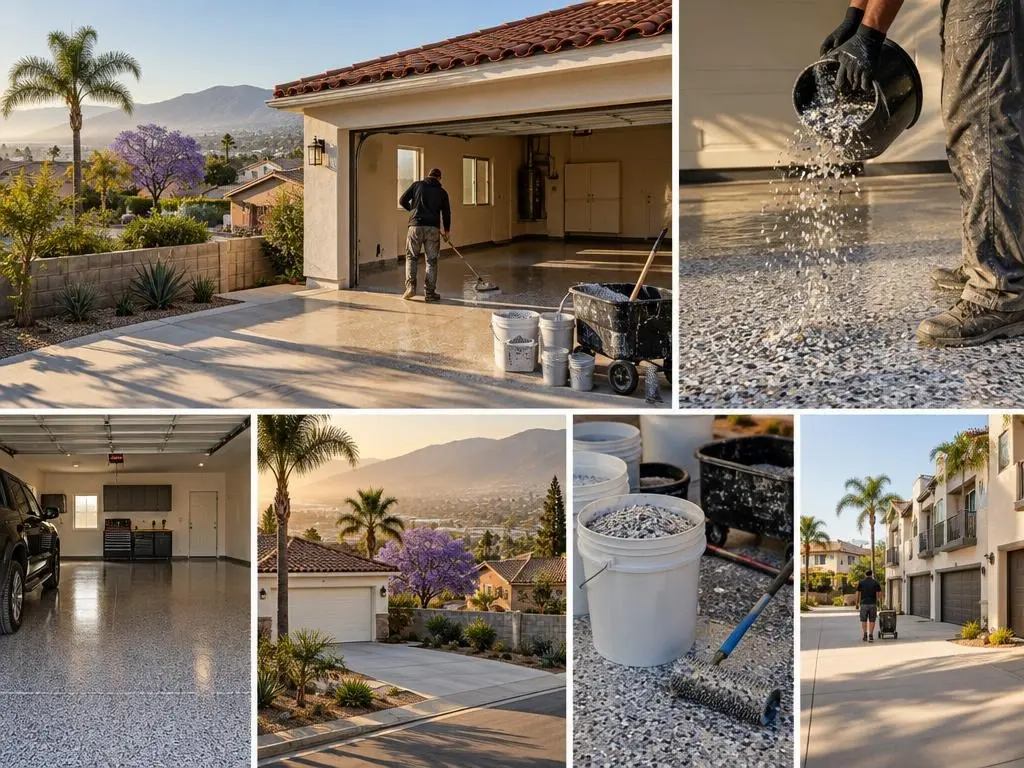
As with any coating, we diamond grind first. Next comes a base coat in the color you want showing between the chips. Before the base sets, we hand-broadcast vinyl flake over it. In a full broadcast the chips keep going down until the base will not hold more, covering the surface edge to edge. Once it cures, we scrape the floor and vacuum away loose flake, and finish with one or two clear coats that lock the chips in place and set the final texture. A partial broadcast uses fewer chips, leaving more of the base color visible.
Full or partial broadcast
A full broadcast gives the most even look, the most texture and the strongest ability to hide flaws in older concrete. It also builds more thickness, which helps with hot tires. A partial broadcast reads more like a solid floor with a speckle and is often chosen for laundry rooms or interior spaces where people want a smoother feel. We bring sample boards of both so you can compare them in your own light.
Choosing chip size and color
Vinyl chip comes in several sizes and dozens of blends. Larger chips make a bold, stone-like pattern. Smaller chips give a tighter speckle that looks calmer in a small garage. Gray and tan blends hide everyday dust and the fine grit that blows in during dry, windy spells. Wikipedia notes the Santa Ana winds that bring hot, dry air in autumn and winter, and anyone who parks with the door open knows how much dust those days leave behind. Darker blends show light dust more, lighter blends show tire marks more. A mid-tone blend is the safe middle.
Why the topcoat matters more than the chips
The chips are mainly for looks. It is the clear topcoat that takes the abuse and faces the sun. HomeGuide gives standard epoxy a poor to fair grade for UV resistance, so a clear epoxy topcoat on a sunny garage floor may yellow, and that tint is obvious over light chips. Our flake floors get a polyaspartic topcoat instead, which earns an excellent UV grade from HomeGuide. The number of topcoats also sets how rough the floor feels: two coats leave a smoother, easier-to-mop surface, while one coat keeps more texture and grip.
Flake over older Los Angeles slabs
Flake is forgiving on the kind of concrete common in older Los Angeles garages: small pits, patched cracks, and stains that never came out. Once the floor is ground and the cracks are filled, a full broadcast hides most of those marks. It will not hide a crack that is still moving or a slab with moisture coming through it, which is why we test for moisture and look at each crack before quoting. A flake floor laid on a damp slab can blister just like any other coating.
Where chip floors fit
- Two- and three-car garages that see daily parking
- Garage gyms where rubber mats and dropped weights scuff the floor
- Workshops where dust and small spills are constant
- Laundry rooms and mudrooms on a concrete slab
- Covered patios and some commercial spaces such as locker rooms, break rooms and storage areas
Flake versus solid color in a garage
A solid-color floor looks crisp the day it is finished, but every footprint, bit of dust and tire scuff shows against it. A flake floor trades a little of that crispness for a surface that looks clean between sweeps. That is why so many people with a working garage end up with flake. A light partial broadcast can split the difference if you like the look of a solid floor but want some forgiveness. We also add a coat of flake around the edges of solid-color floors in some garages, where dust collects against the walls.
Caring for a flake floor
Sweep or blow out grit often, since sand under tires is what wears the topcoat over time. Mop with a pH-neutral cleaner and warm water. Wipe up brake fluid, gasoline and harsh chemicals soon after a spill. Put a pad under motorcycle kickstands and jack stands so the point load does not dent the surface. With that, a chip floor keeps its look for many years.
Flake Floor Options
Every chip floor starts with the same prep. These are the choices that change the look and feel.
Full broadcast
Chips cover the whole base coat for maximum texture, thickness and flaw hiding.
Partial broadcast
Fewer chips scattered across a solid base color, for a smoother, speckled finish.
Chip size and blend
Small, medium or large vinyl flake in mixed color blends picked from sample boards.
Polyaspartic clear topcoat
One or two UV-stable clear coats that seal the chips and set the texture.
Anti-slip additive
Fine grit added to the topcoat for extra grip where floors get wet.
Cove and stem wall finish
The flake system carried a few inches up the wall or curb for a clean edge that is easy to hose.
Typical Flake Floor Coating Costs
| Item | Published range | Source |
|---|---|---|
| Two-car garage, epoxy system | $1,600 to $5,800 | HomeGuide |
| Two-car garage, polyaspartic system | $2,000 to $6,900 | HomeGuide |
| Polyaspartic garage coating, per sq ft | $5 to $12 | HomeGuide |
| Vinyl flakes, material only | About $0.04 per sq ft | HomeAdvisor |
| High-grade coating upgrade | Adds 20% to 30% | HomeAdvisor |
| Typical contractor minimum | $500 to $1,000 | HomeAdvisor |
National ranges from HomeGuide and HomeAdvisor cost guides, not a Los Angeles quote. Chip blend, broadcast density, topcoat count and repair work each affect the total. The written estimate we give you after measuring and testing the slab is the price.
How We Install a Flake Floor
1. Test, measure and pick a blend
We test for moisture, look at cracks and stains, and bring chip samples to compare in your garage.
2. Grind and repair
We diamond grind and vacuum the slab, then fill cracks and chips.
3. Base coat and broadcast
We roll the base coat and throw flake into it by hand to the density you chose.
4. Scrape and clean
After curing, we scrape off and vacuum up loose chips to even the surface.
5. Clear topcoat
One or two UV-stable clear coats seal the flake and set the final texture.
Why Choose Us for Flake Floor Coatings
Samples in your light
We bring chip boards so you see the blend under your own garage lights and daylight.
Texture you choose
We explain how one versus two topcoats changes grip and cleaning before you decide.
Prep is the same as any floor
Chips hide flaws, but we still grind, repair and test the slab first.
Flake Floor Coatings Questions
What is a flake epoxy floor?
A resin base coat gets colored vinyl chips broadcast into it, and a clear topcoat seals it all. The chips bring color, texture and grip, and they help disguise dust and wear.
Is chip flooring slippery?
Less than a smooth gloss floor. The chips leave a slight texture, and a single topcoat or an anti-slip additive adds more grip where floors get wet.
Will a flake floor hide cracks?
It hides repaired, stable cracks and small flaws well. It will not hide a crack that keeps moving, so we check each crack before quoting.
Which chip colors hide dirt well?
Mid-tone gray and tan blends do the most to hide everyday dust and tire marks. Very dark blends show light dust, while very light ones reveal tire marks.
Why use a polyaspartic topcoat on a chip floor?
HomeGuide grades polyaspartic excellent on UV resistance and plain epoxy poor to fair. An epoxy topcoat over light chips in a sunny garage can yellow, so we use polyaspartic.
Flake Floor Coatings Service Areas
- Epoxy Flooring in Los Angeles, CA
- Epoxy Flooring in Pasadena, CA
- Epoxy Flooring in Glendale, CA
- Epoxy Flooring in Burbank, CA
- Epoxy Flooring in Santa Monica, CA
- Epoxy Flooring in Culver City, CA
- Epoxy Flooring in Beverly Hills, CA
- Epoxy Flooring in Torrance, CA
- Epoxy Flooring in Long Beach, CA
- Epoxy Flooring in Inglewood, CA
- Epoxy Flooring in Downey, CA
- Epoxy Flooring in Whittier, CA
- Epoxy Flooring in Alhambra, CA
- Epoxy Flooring in Arcadia, CA
- Epoxy Flooring in Monrovia, CA
- Epoxy Flooring in West Covina, CA
- Epoxy Flooring in Santa Clarita, CA
- Epoxy Flooring in Calabasas, CA
- Epoxy Flooring in Redondo Beach, CA
- Epoxy Flooring in Manhattan Beach, CA
- Epoxy Flooring in Hawthorne, CA
- Epoxy Flooring in Carson, CA
- Epoxy Flooring in Gardena, CA
- Epoxy Flooring in Lakewood, CA
- Epoxy Flooring in South Gate, CA
Get a Flake Floor Coatings Estimate
Book a free estimate and look at chip samples right in your garage.