
Warehouses, shops, studios and storefronts
Commercial & Industrial Epoxy in Los Angeles, CA
Concrete floor coatings matched to your traffic and chemicals, scheduled to keep your business running as much as possible.
- Free on-site estimates
- Slab moisture reading taken before we coat anything
- Written quote that lists the prep and every coat
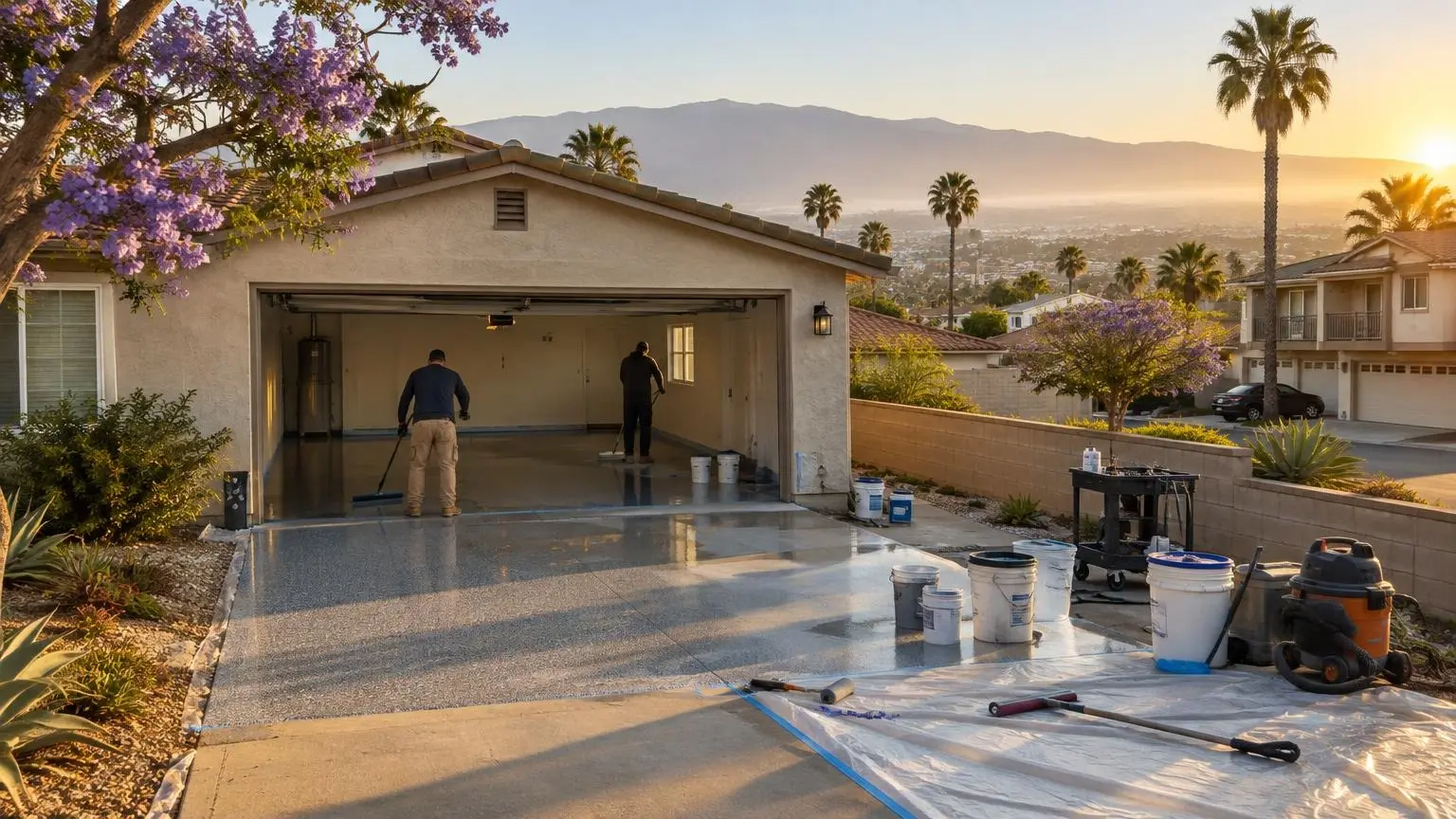
Commercial Epoxy Flooring for a Working City
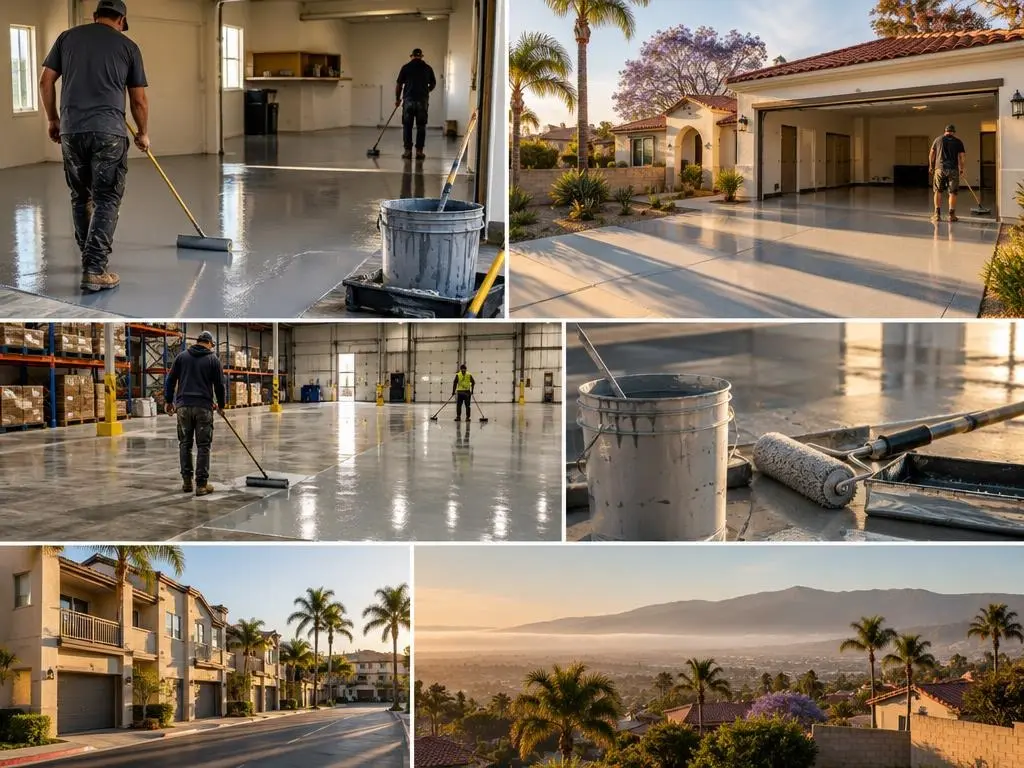
Commercial & Industrial Epoxy is the service we offer to Los Angeles businesses that need a concrete floor coating to handle real work. Commercial epoxy flooring seals the slab against oil, chemicals and water, cuts down on concrete dust, brightens the space and makes the floor faster to clean. Wikipedia describes Los Angeles as the largest manufacturing center in the United States by employment, home to the Port of Los Angeles and to one of the oldest film and television industries anywhere. That adds up to a huge range of working floors: warehouses, fabrication shops, auto repair bays, production shops, breweries, kitchens, gyms, retail floors and office back rooms.
Matching the system to the floor
There is no single commercial coating. We start by asking what the floor actually sees:
- Forklifts, pallet jacks or carts, and how heavy the loads are
- Oils, fuels, solvents, cleaners or food acids that hit the floor
- Hot water, steam or wash-downs
- Rolling tool chests, jack stands or dropped parts
- Customer foot traffic and how the floor needs to look
A light-duty storeroom may only need a two-coat epoxy or polyaspartic. A busy shop floor usually needs a thicker build. HomeAdvisor lists 100 percent solids industrial coatings as a separate, higher-cost category for good reason: they go on thicker and stand up to more. We explain the options in plain terms and put the chosen system in writing.
Downtime is part of the plan
For most businesses, the biggest cost of a new floor is the days it is out of service. Bob Vila's guide points out that a business may have to shut for a day or two during a coating job. We plan for that. We can coat in phases so some of the floor remains usable, work over weekends or slow days, and use fast-curing polyaspartic topcoats that HomeGuide says take traffic in about 24 to 48 hours rather than the week epoxy may require. We go over the schedule with you before quoting.
Prep on commercial slabs
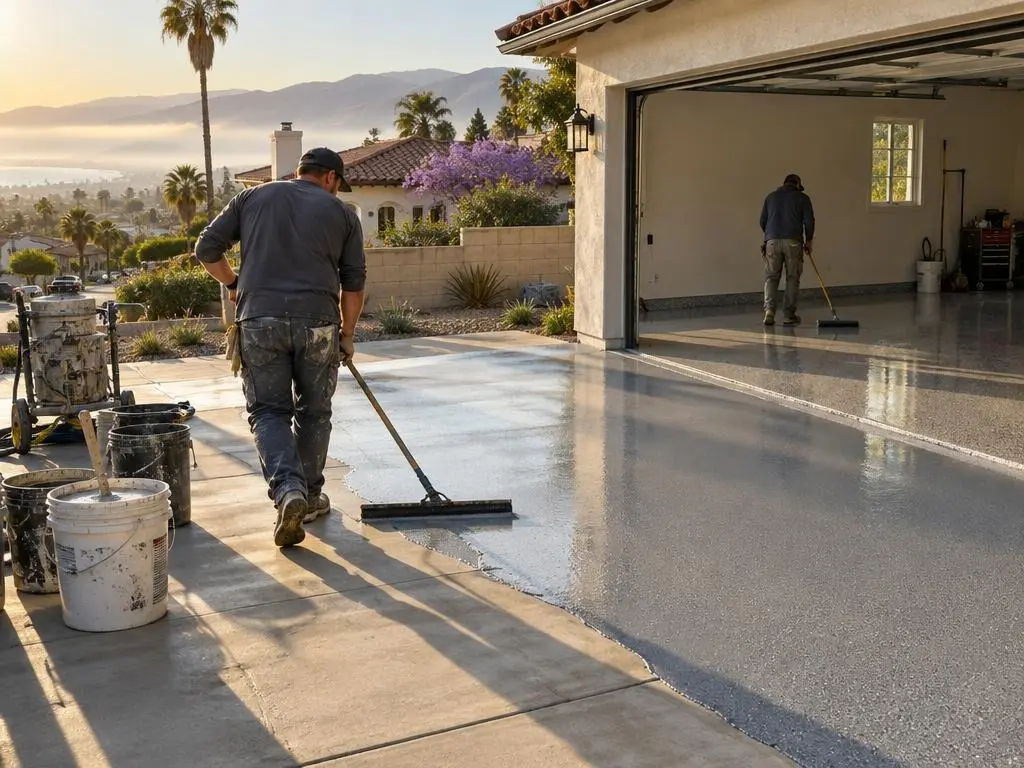
Commercial slabs often come with history: old paint, failed coatings, adhesive from removed flooring, embedded oil, saw cuts and damaged joints. We diamond grind to remove all of it and open the concrete, then repair spalls, cracks and joints. Joints that carry forklifts are filled with a material made for that load. Moisture testing matters even more on large slabs, because one damp area can lift a big section of coating. When a slab reads too wet, we switch to a primer that tolerates moisture, or we let you know before any work begins.
Earthquakes, cracks and older buildings
Los Angeles sits among active faults, and Wikipedia notes the 1994 Northridge earthquake caused about $12.5 billion in damage. Many older commercial buildings show cracking from settlement and past shaking. We repair stable cracks so the coating is continuous. Cracks that are clearly moving are flagged before we coat, since a coating will crack over them, and in some buildings the right answer is to treat them as joints.
Safety and cleaning
Coated floors can be slick when wet or oily, so we add aggregate to the topcoat where workers walk, in wash areas and near doors. Light colors reflect more light and make a shop brighter. Line striping for walkways, work cells and storage areas can be built into the coating. Cove bases, where the coating turns a few inches up the wall, help wash-down areas stay sanitary because water and dirt have no seam to collect in.
Heat, sun and loading docks
Warehouse doors in the Basin and the Valley stand open much of the day, and the sun and heat that come in with them affect the floor near the door. Standard epoxy yellows in UV, so floors in the sun's path get a UV-stable topcoat. On hot days, especially during the September and October heat waves Wikipedia describes, we schedule coats early to keep working time under control.
Questions to settle before we quote
A few details make a commercial quote accurate: the hours the space can be closed, whether equipment or racking can be moved, what cleaning chemicals your staff use, whether the floor needs to meet any food-safety or customer-facing look, and where the power and water hookups are. If you lease the space, check what your lease says about floor finishes and get the landlord on board early. We can provide product data sheets for landlords, property managers or your own safety staff before the job is scheduled.
Keeping a commercial floor in service
Auto scrubbers and pH-neutral cleaners keep coated floors looking right. Keep grit off the floor with mats at entries, because grit under wheels is what wears a topcoat. In high-traffic lanes, a scheduled recoat of the topcoat every few years is far cheaper than a full redo.
Commercial Floor Services
We build the system around the work done on the floor.
Warehouse and industrial floors
Thicker epoxy or 100 percent solids systems for forklifts, pallet jacks and heavy loads.
Auto repair and fleet bays
Chemical-resistant coatings for oil, fuel, brake fluid and dropped parts.
Kitchens, breweries and wash areas
Textured, cove-based systems that handle water and cleaning.
Retail and studio floors
Solid, flake or metallic finishes for spaces where the floor is seen.
Joint and crack repair
Spalls, saw cuts and joints rebuilt with materials matched to the traffic.
Safety striping
Walkway, aisle and work area lines built into the coating.
Topcoat refresh
Cleaning, scuffing and recoating a worn but sound commercial floor.
Typical Commercial Concrete Floor Coating Costs
| Item | Published range | Source |
|---|---|---|
| Commercial or industrial 100% solids | $12+ per sq ft | HomeAdvisor |
| Concrete resurfacing | $3 to $7 per sq ft | HomeGuide |
| Polyaspartic, 500 sq ft | $2,500 to $6,000 | HomeGuide |
| Polyaspartic, 600 sq ft | $3,000 to $7,200 | HomeGuide |
| Patching cracks and spalls | $25 to $250 | HomeAdvisor |
| Typical contractor minimum | $500 to $1,000 | HomeAdvisor |
National ranges from HomeAdvisor and HomeGuide. Commercial pricing depends on floor area, system thickness, chemical and load requirements, repair work and after-hours scheduling. We walk the site, test the slab and give you a written estimate, and that figure is the price.
How We Handle a Commercial Floor
1. Site walk
We look at traffic, chemicals, cleaning methods and the slab, and run moisture tests.
2. System and schedule
We recommend a system and a phasing plan to limit downtime, all in a written quote.
3. Grind and repair
Old coatings and contamination are ground off, and joints, cracks and spalls are repaired.
4. Coat
Primer, build coats, texture and topcoat, with striping if needed, timed to slab conditions.
5. Return to service
We give clear times for foot traffic, carts and forklifts based on the product used.
Why Choose Us for Commercial & Industrial Epoxy
Phased work
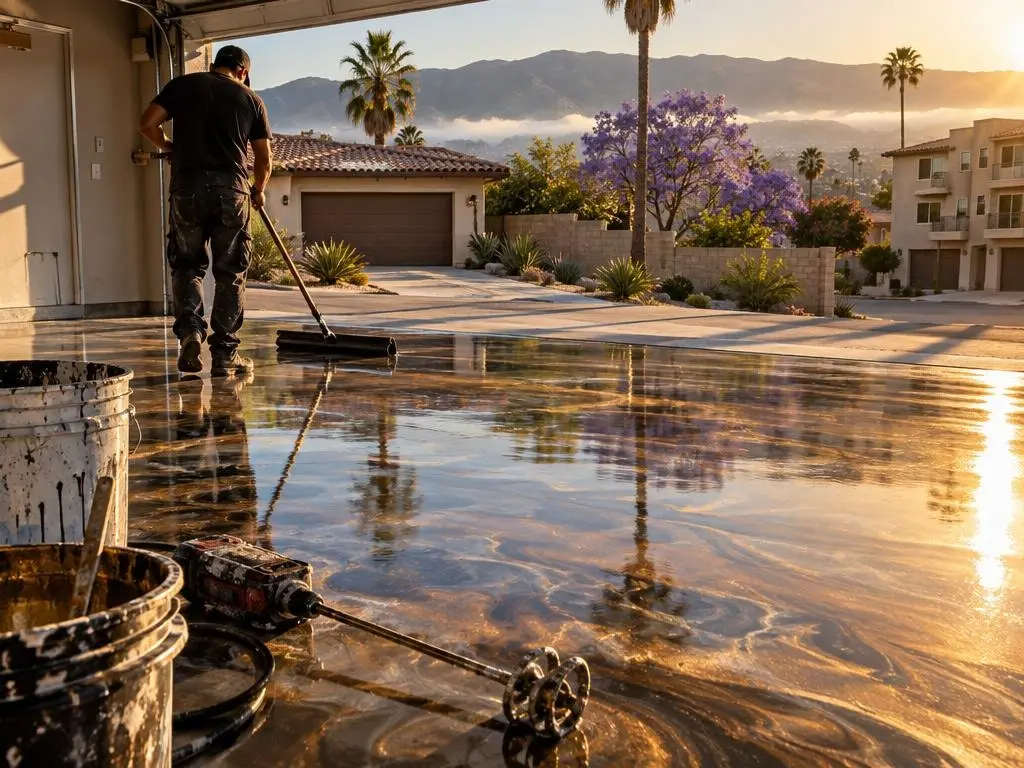
We can coat in sections or off-hours so the business keeps running.
Systems sized to the job
We match thickness and chemistry to your traffic and chemicals rather than over- or under-building.
Plain written scope
The quote lists the system, prep, repairs, schedule and total.
Safety built in
Texture, striping and cove bases are offered where they make the floor safer and easier to clean.
Commercial & Industrial Epoxy Questions
How much downtime should my business plan for?
It depends on floor size and system. Bob Vila notes businesses may close a day or two, and fast-curing polyaspartic topcoats can return a floor to service in about 24 to 48 hours. We also phase work in sections or off-hours.
What is the difference between commercial and residential epoxy?
Commercial floors usually get thicker builds, more chemical resistance and more texture. HomeAdvisor lists 100 percent solids industrial coatings as a separate category for heavier use.
Can you coat over an old commercial coating?
Only when it is fully sound and compatible. Usually we grind it off, because the new coating can never be stronger than the layer it sits on.
Do you do safety striping?
Yes. Aisles, walkways and work areas can be marked in the coating so the lines last as long as the floor.
Will a coated floor be slippery for workers?
It can be without texture. We add aggregate to the topcoat in walk paths, wash areas and doorways.
Commercial & Industrial Epoxy Service Areas
- Epoxy Flooring in Los Angeles, CA
- Epoxy Flooring in Pasadena, CA
- Epoxy Flooring in Glendale, CA
- Epoxy Flooring in Burbank, CA
- Epoxy Flooring in Santa Monica, CA
- Epoxy Flooring in Culver City, CA
- Epoxy Flooring in Beverly Hills, CA
- Epoxy Flooring in Torrance, CA
- Epoxy Flooring in Long Beach, CA
- Epoxy Flooring in Inglewood, CA
- Epoxy Flooring in Downey, CA
- Epoxy Flooring in Whittier, CA
- Epoxy Flooring in Alhambra, CA
- Epoxy Flooring in Arcadia, CA
- Epoxy Flooring in Monrovia, CA
- Epoxy Flooring in West Covina, CA
- Epoxy Flooring in Santa Clarita, CA
- Epoxy Flooring in Calabasas, CA
- Epoxy Flooring in Redondo Beach, CA
- Epoxy Flooring in Manhattan Beach, CA
- Epoxy Flooring in Hawthorne, CA
- Epoxy Flooring in Carson, CA
- Epoxy Flooring in Gardena, CA
- Epoxy Flooring in Lakewood, CA
- Epoxy Flooring in South Gate, CA
Get a Commercial & Industrial Epoxy Estimate
Schedule a free site walk and written estimate for your floor.